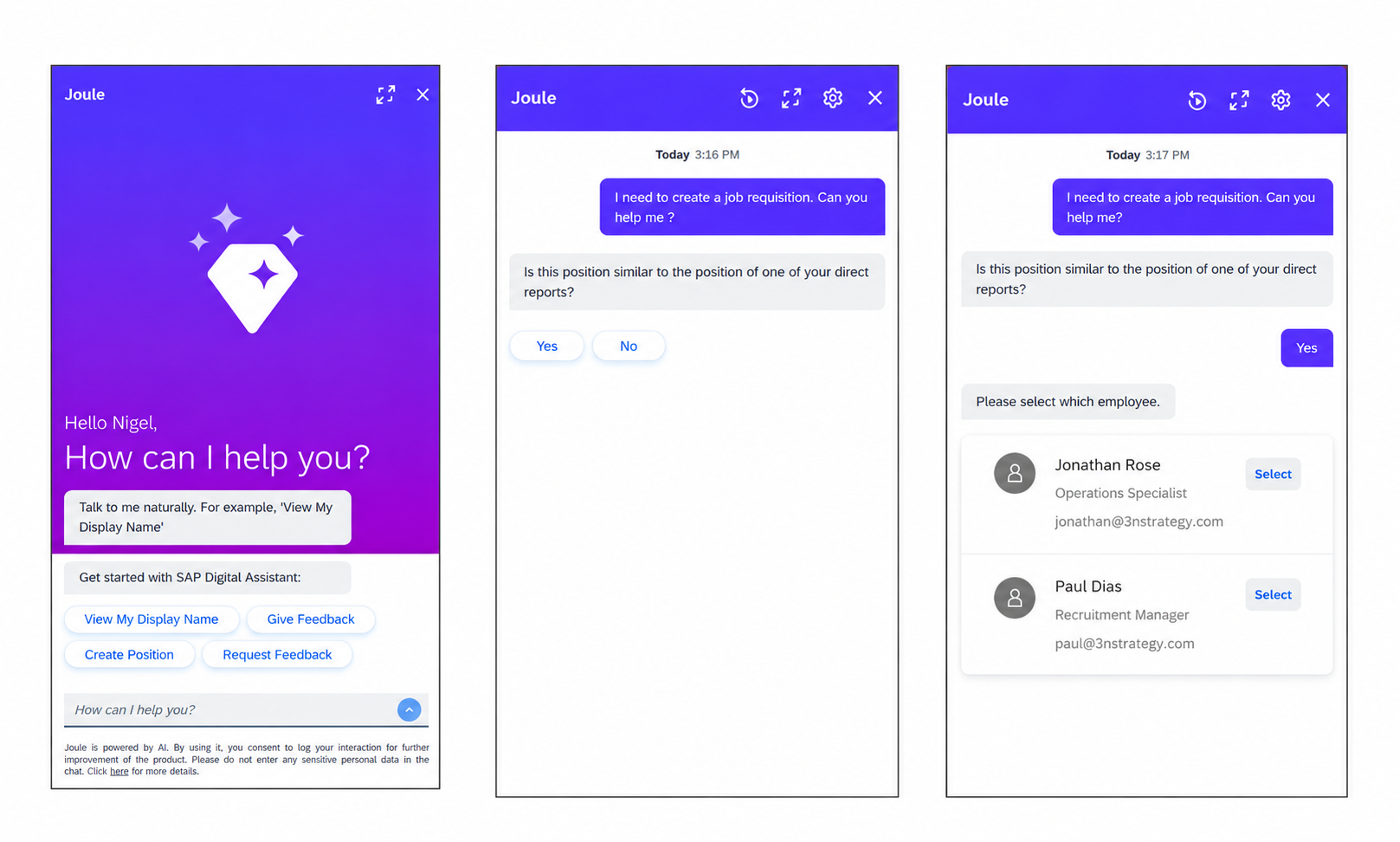

HR teams we consult often spend a significant amount of time navigating different SAP systems, searching for employee information, answering workforce questions and completing administrative tasks. Even with SAP SuccessFactors is the core HR tool at the centre of HR operations, getting things done can still involve multiple applications, manual processes and input from different teams.
SAP Joule Work introduces a different way of working.
Rather than navigating systems and processes, imagine an HR Business Partner simply describing what they need to achieve - whether that's understanding workforce trends, reviewing employee development needs or coordinating an HR activity - and having AI help them complete the work.
Building on SAP's existing AI assistant, Joule Work introduces a new AI-powered workspace that brings together business applications, workforce data and intelligent AI agents into a single experience.
For SAP SuccessFactors customers, this represents an important shift: from using AI to find information and answer questions, towards using AI to help complete HR tasks and workflows.
In this guide, we'll explore what SAP Joule Work is, how it works and what it could mean for the future of HR and People Analytics.
What is SAP Joule Work?
SAP Joule Work is an AI-powered workspace that brings together business applications, information and AI agents into a single experience.
It builds on Joule, SAP's AI assistant, by introducing a more comprehensive way for people to interact with business systems.
Traditionally, someone wanting to complete an HR activity might need to open SAP SuccessFactors, locate the relevant information, switch to another application, analyse the results and manually complete the next steps.
With Joule Work, the starting point becomes much simpler: tell the system what you want to accomplish.
Joule Work uses AI assistants and specialised agents to interpret requests, identify relevant information and coordinate supported activities across connected systems.
SAP describes this as an engagement layer: a new way for users to interact with enterprise applications, rather than a replacement for the applications themselves.
How does SAP Joule Work work?
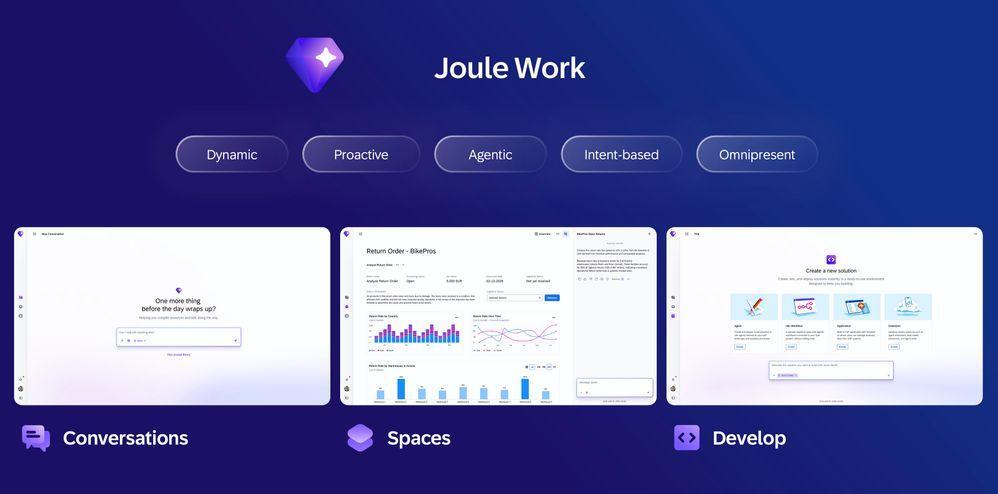
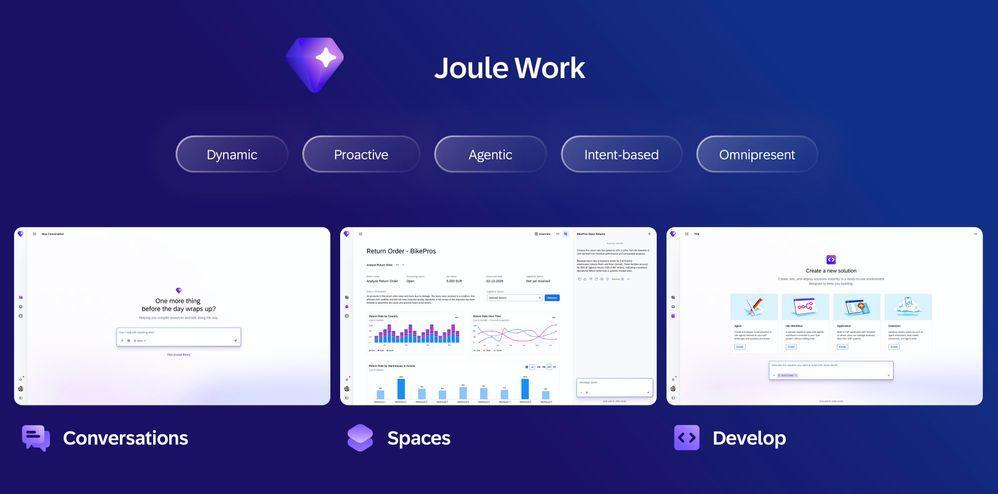
Joule Work brings several AI capabilities together to create a more connected experience.
1. Conversations: Ask questions and request actions
Users interact with Joule through natural language. Instead of searching through menus, they can ask questions, request information or describe tasks they want completed.
Joule interprets their intent and directs supported requests to the appropriate capabilities.
For example, an HR Business Partner could ask for information about a workforce trend, while a manager might request help finding relevant employee development information.
The objective is to make interacting with enterprise systems feel more like having a conversation than navigating software.
2. Spaces: Bring everything together
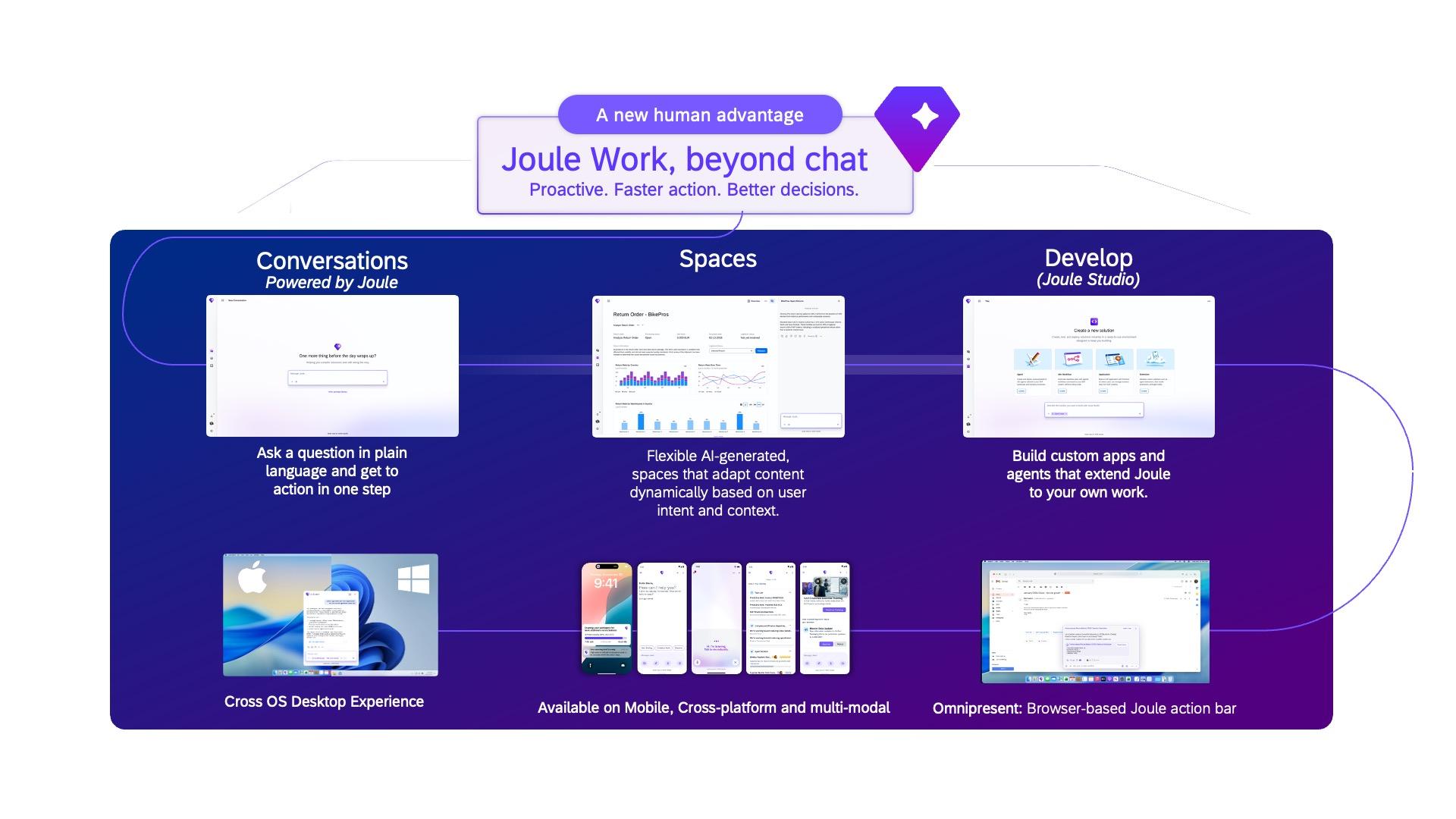
Spaces are dynamic workspaces that bring relevant data, tools and context together around a particular objective.
Rather than working across disconnected screens, users can explore information and manage more complex activities in one place.
For HR teams, this could mean bringing together workforce information, relevant applications and AI-powered assistance to support a particular business objective.
3. AI Agents: Help complete the work
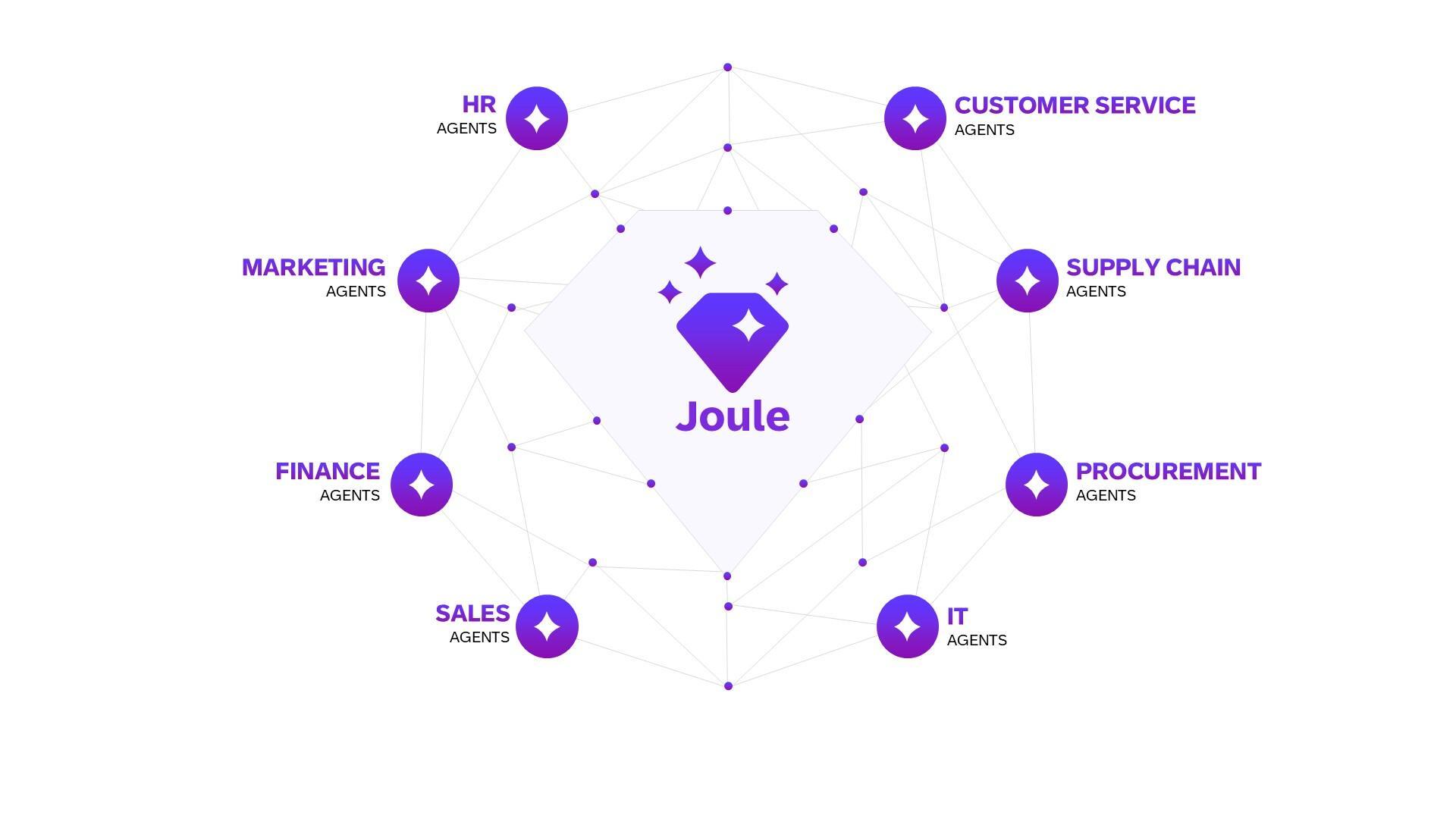
Joule Assistants can coordinate specialised AI agents to carry out supported activities, retrieve information and execute steps across applications.
This is where the experience moves beyond answering questions towards helping deliver outcomes.
Instead of simply providing information about an HR process, an AI agent could potentially help coordinate parts of that process, subject to the capabilities, permissions and integrations available.
SAP's wider Joule architecture also includes capabilities for automating recurring work and developing customised agent experiences.
What does Joule Work mean for SAP SuccessFactors customers?
For organisations using SAP SuccessFactors, Joule Work has the potential to change how employees, managers and HR professionals interact with their HR systems.
Rather than thinking about which application to open or which report to run, users can increasingly focus on the question they need answered or the task they need completed.
Consider three examples.
1. HR leaders: From workforce questions to decisions
A CHRO might want to understand where the organisation faces its greatest workforce challenges.
Instead of requesting multiple reports from different teams, the ambition is for an AI-powered experience to help explore questions such as:
"Where are our biggest skills gaps, and which parts of the business are most exposed?"
With the appropriate People Analytics capabilities, connected data and supported AI functionality, Joule could help surface relevant workforce information, explore the findings and support decisions about where action is needed.
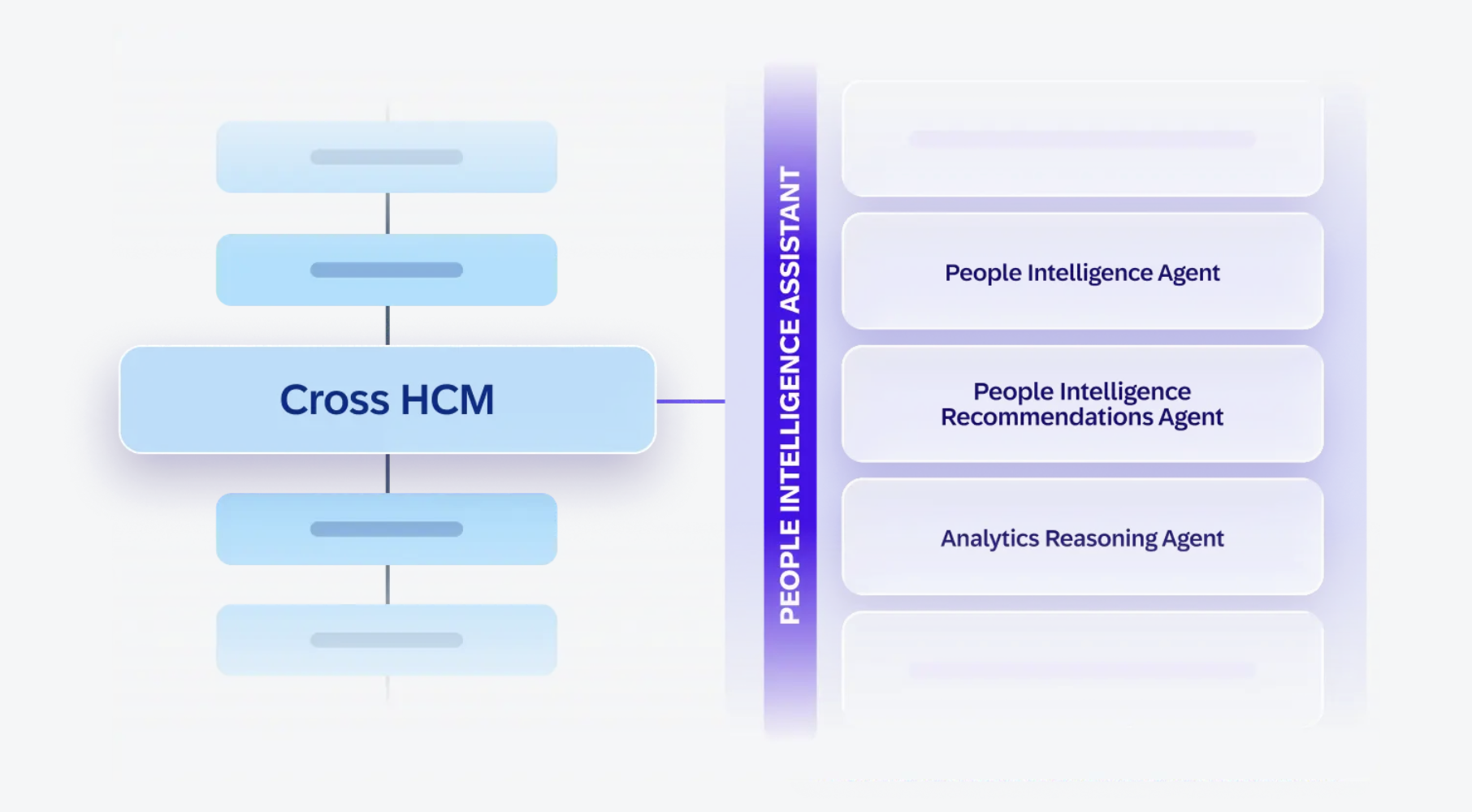
This is particularly relevant to organisations exploring SAP People Intelligence and Conversational Analytics.
The opportunity is to make complex workforce information more accessible to the people responsible for making strategic HR decisions.
2. HR Business Partners: Less administration, more support for the business
HR Business Partners frequently work across employee information, talent processes, learning activities and workforce reporting.
Joule Work offers a way to bring these activities closer together.
For example, an HR Business Partner might want to review workforce information, understand a team's development priorities and identify appropriate next steps.
Rather than manually moving between several systems, AI assistants and agents could help coordinate supported parts of the process.
The opportunity is to spend less time gathering information and navigating applications, and more time supporting managers and employees.
3. Employees and managers: A simpler way to get things done
Employees and line managers can also benefit from conversational interaction with SAP SuccessFactors.
Existing Joule capabilities already support selected informational, navigational and transactional HR scenarios, helping users find information and complete supported tasks.
Joule Work extends the broader vision towards coordinated activities involving multiple applications and AI agents.
For example, a manager might want to understand an employee development process, find relevant learning opportunities or complete an administrative task without navigating several separate screens.
The goal is a simpler, more intuitive employee experience, where people can focus on what they need to achieve rather than how to operate the underlying technology.
What's the difference between SAP Joule and SAP Joule Work?
Although the names are similar, they describe different parts of SAP's AI experience.
SAP Joule is SAP's AI assistant. It enables users to interact with supported SAP applications using natural language, helping them find information, navigate systems and perform certain tasks.
SAP Joule Work is a broader AI-powered workspace that brings together conversations, dynamic workspaces, AI assistants and specialised agents.
While Joule provides the conversational intelligence, Joule Work creates an environment where that intelligence can be combined with applications, data and workflows to help users accomplish more complex objectives.
For SAP SuccessFactors customers, this distinction is important.
Joule can help an employee find information or complete a supported HR task. Joule Work is designed to extend that experience by helping coordinate activities that may involve multiple systems, information sources and AI agents.
The key distinction is that Joule is the AI assistant, while Joule Work is the broader workspace through which assistants and agents can help users accomplish their goals.
Joule Work complements existing SAP application interfaces rather than replacing them.
How does Joule Work relate to SAP People Intelligence and Conversational Analytics?
For SAP SuccessFactors customers investing in People Analytics, this is an especially interesting development.
Historically, workforce analytics has largely been about producing reports and dashboards. HR teams gathered data, analysed trends and presented findings to decision-makers.
SAP People Intelligence is helping move this experience towards more accessible, contextual workforce insights.
Conversational Analytics takes that further by enabling users to ask supported workforce questions in natural language, rather than relying entirely on traditional reporting interfaces.
Joule Work builds on the wider direction of travel: from accessing information to using AI to help act on it.
Consider how these capabilities contribute to the evolution of HR and People Analytics:
- Traditional Reporting: Find and interpret workforce data through reports and dashboards.
- SAP People Intelligence: Understand workforce trends, relationships and context using connected HR data.
- Conversational Analytics: Ask workforce questions in natural language and explore relevant insights.
- SAP Joule Work: Bring together information, applications and AI agents to help coordinate supported tasks and actions.
These are complementary capabilities, not necessarily a fixed technical upgrade sequence.
For example, a future HR workflow might begin with a question about workforce capability gaps, progress to an analysis of available skills and development options, and ultimately help coordinate relevant actions.
An HR leader could potentially move from asking:
"Which business units are most exposed to critical skills shortages?"
To exploring:
"What development or redeployment opportunities could help us close those gaps?"
And eventually requesting:
"Help me coordinate the next steps with the relevant HR teams."
This illustrates the longer-term potential of connecting workforce insights with AI-assisted workflows.
Exactly which questions and actions can be supported depends on the available data, licensed SAP products, connected agents and current functionality.
For HR leaders, the opportunity is not simply to receive answers faster, but to make those answers more useful in driving workforce decisions and actions.
What should SAP SuccessFactors customers do to prepare?
Joule Work introduces new opportunities, but organisations should avoid treating AI readiness as simply a question of switching on a new feature.
The value of AI-powered HR experiences depends on the quality of the information, processes and systems supporting them.
There are four useful areas to consider.
1. Start with the questions and activities that matter
Before exploring technology, identify where HR leaders, managers and employees currently lose time searching for information, requesting reports or completing repetitive activities.
Which workforce questions are difficult to answer today? Which HR processes involve unnecessary manual steps? Where would faster access to information improve decision-making?
These are potential starting points for identifying valuable AI use cases.
2. Understand your SuccessFactors data
AI-powered experiences depend on reliable, accessible and appropriately governed information.
For SAP SuccessFactors customers, this means understanding where workforce data sits, how consistently it is maintained and whether the organisation has confidence in the information being used.
Reliable workforce information, consistent definitions and appropriate access permissions are essential when AI is expected to support business decisions.
3. Review your People Analytics capabilities
Organisations should consider how SAP People Intelligence, existing reporting capabilities and their wider data architecture can support the workforce questions they want to answer.
This includes understanding which insights are already available, where data gaps exist and what additional capabilities might be required.
The better your organisation understands its workforce data and analytics requirements, the better positioned it will be to take advantage of emerging AI capabilities.
4. Assess technical readiness and availability
Joule Work is being introduced through a phased rollout, and organisations should confirm which capabilities are available within their SAP landscape.
This includes reviewing licensing, regional availability, identity and access requirements, supported AI agents and integration prerequisites.
Not every demonstrated or announced capability will necessarily be available to every SAP SuccessFactors customer immediately.
The important point is that preparing for AI is as much about understanding your business questions and data as it is about implementing new technology.
The future of AI-powered HR with SAP SuccessFactors
Joule Work reflects a broader shift in enterprise technology.
Today, employees are generally expected to understand how their business systems work: which applications to open, where to find information and which processes to follow.
SAP's vision increasingly reverses that relationship.
Instead of asking people to navigate the technology, AI can help bring the relevant technology, information and actions to the person.
For SAP SuccessFactors customers, this creates an opportunity to make HR information more accessible, reduce repetitive work and help HR professionals spend more time on the decisions that matter.
As SAP People Intelligence, Conversational Analytics and AI agents continue to evolve, organisations could increasingly connect workforce questions, insights and actions within a more unified experience.
The long-term opportunity isn't simply to ask better questions of your HR data. It's to connect those answers to meaningful action.
How 3n Strategy can help
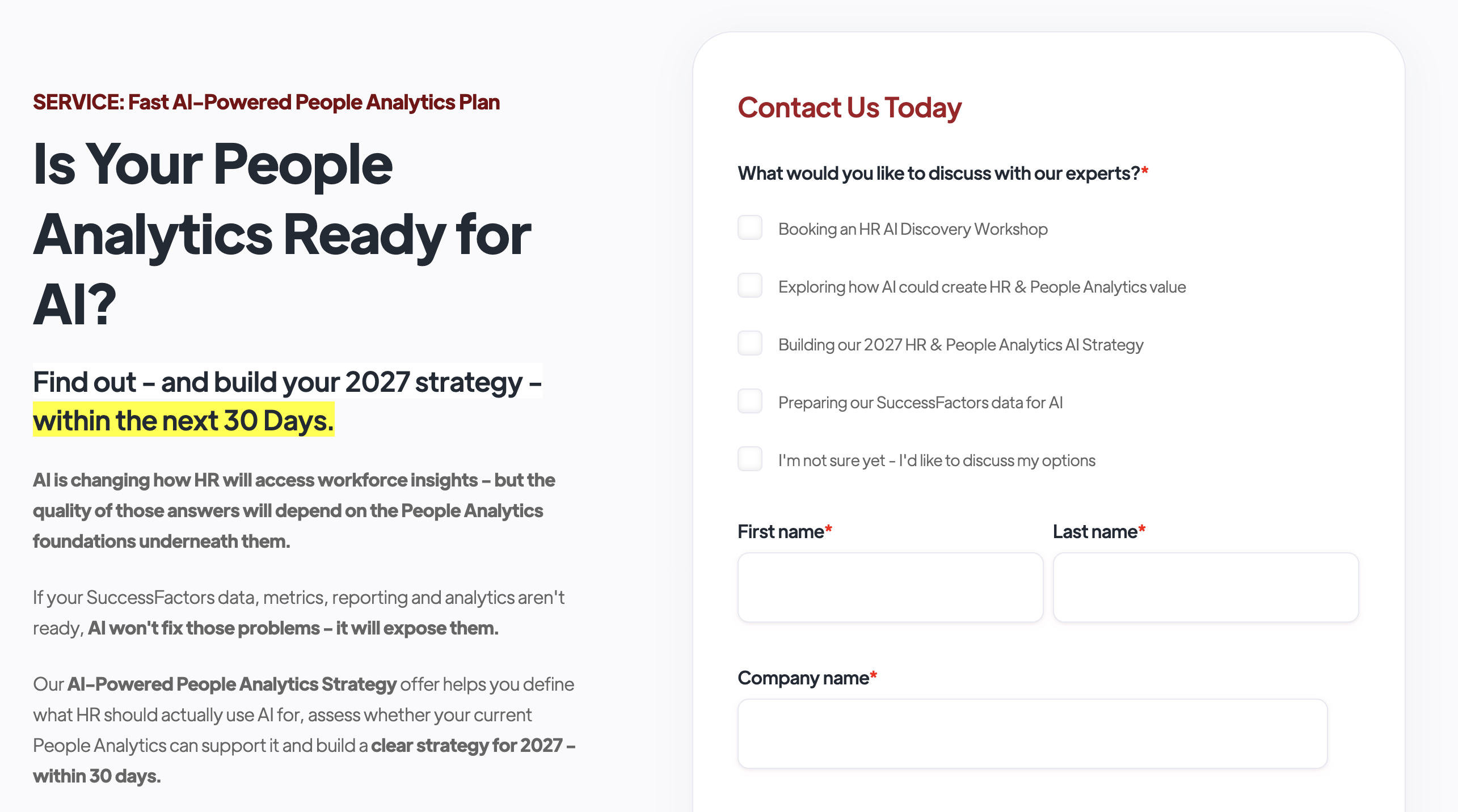
At 3n Strategy, we help SAP SuccessFactors customers prepare for the next generation of People Analytics, including SAP People Intelligence, Conversational Analytics and AI-powered workforce decision-making.
Whether you're exploring how to make your existing SuccessFactors data more accessible, preparing for People Intelligence or developing your wider HR AI strategy, we can help you understand your current capabilities and identify practical next steps.
Want to understand how ready your SAP SuccessFactors environment is for AI-powered People Analytics?
Explore our HR AI Discovery Workshop and start building a roadmap for 2027.